Posts

206. Reading Lolita in Tehran by Azar Nafisi

Image
Azar Nafisi's Reading Lolita in Tehran - A Memoir in Books (Random House, 2003; 347) tells stories of the lives of the author and seven of her students between the period when the Shah was overthrown and the 'Islamic Republic' was instituted to the period where the author finally left the country, in 1997. Through her narrative, she unfolds how civil liberties, especially of women and more generally of liberals, were drastically and suddenly parred down after the revolution.  Azar Nafisi's decision to use the stories of other books to tell her story, drawing comparisons, analogies, and association, was fascinating; it was enlightening how one word - like poshlust - used by an author could have a reverberating effects on the lives of people far away from the centre of origin. In this way, Nafisi provided a deeper understanding of these books, of which Nabokov's Lolita  is but just one. Azar compares life under the secular government and life under the Islamic...
205. IPods in Accra by Sophia Acheampong

Image
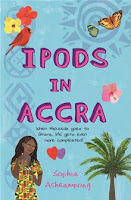
IPods in Accra  (Piccadilly, 2009; 185) by Sophia Acheampong continues the story of young Makeeda as she searches for her root. In this story, Makeeda is a bit older, is studying to write her GCSE exams and (un)working on her relationship with Nelson. It has all the ingredients of a good chicklit and a YA. The love is not steamy but juvenile, like we all do. The questions that Makeeda has to find answers to are everyone's problem. Her relationship with Nelson isn't work; meanwhile she has found that there is something between her and her Maths home-tutor, Nick. Now, she must go through all the burdens of breaking up safely with Nelson and work her way into Nick's heart. As if this isn't complicated enough, Nick, himself, is now 'going-out' with an eye-popping belle. The situation is now tensed and her friends, with whom she would have shared her problems, are now also dealing with similar matters, some of them becoming distant as a result. If combinin...

#Reading2013: Books and Authors I wish to Read in 2013

Image
Though the year is more than a month away from ending, I've been dreaming of books to read in the new year, 2013. Like every reader, I have a pile of unread books on my new, bigger, bookshelf. However, what the Book Community on the blogosphere does to the reader is an expansion of his wishlist, an introduction to new authors and, unfortunately, sadly, the greedy accumulation of books. Every true reader has experienced this and I'm no different. Consequently, regardless of the unread books on my bookshelf, I've come across certain authors and books - those I've known for a long time but have not read and those I got to know from friends - that I feel I should read. For instance, how absurd it is not to have read Dostoevsky, or Nabokov and still call yourself a reader? How sad it is to have avoided these great Russo-literatti? What about Mikhail Bulgakov? In 2013, I seek to read Russian authors and others whom I've only heard and read reviews of like Gabri...

204. The Inheritance of Loss by Kiran Desai

Image
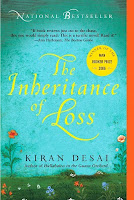
Kiran Desai's The Inheritance of Loss  (Grove Press, 2006; 356), winner of the 2006 Man Booker Prize, is a story about impotence and poverty and how they influence each other. Everybody in this story, rich or poor, religious or non-religious, Hindu or Muslim, Indian or Nepali, is a victim in one form or the other. They, the characters, have relinquished control and decisions to act to an invisible authority; they have made this authority more potent by their willingness to succumb and their unwillingness to take any action to change anything in their lives. Perhaps to them, to think of change is to risk worsening an already worst situation. They have thus accepted their victim-hood. This lethargic acceptance, borne not out of ignorance or pleasure of poverty and which is not on a particular romanticism of a past bucolic life, is something one can describe of Developing Countries. Thus, Kiran's characters are like developing countries - things happen to them; decisions are ma...

203. Diplomatic Pounds and Other Stories by Ama Ata Aidoo

Image
Diplomatic Pounds and Other Stories (Ayebia Clarke 2012; 170) by Ama Ata Aidoo is a collection of twelve beautifully written short stories, which confirms the author’s position as a foremost writer in Africa and beyond. Treating everyday subject with unique perspectives and a delicate style that she alone possesses, Aidoo opens up old traditions and questions long-held views with fresh views. Whether it is about the story of a woman who leaves the country of her birth swearing never to return or the story of a group of girls trapped in an alien culture where issues of feminine proportions are at variance with what they had grown up with, Aidoo shows that her sense of observation is as sharp as ever and that there is tradition in every situation that could be questioned. New Lessons , the first story in the collection, provided the platform to question, subtly as in most of the stories, the idea of home and the motive of migration. Most at times, people who leave the shores of th...

NEW PUBLICATION: Sin is a Puppy that Follows You Home by Balaraba Ramat Yakubu*

Image
From Blaft Publications: Beginning in the late 1980s, northern Nigeria saw a boom in popular fiction written in the Hausa language. Known as littattafa soyyaya ("love literature"), the books are often inspired by Hindi films - which have been hugely popular among Hausa speakers for decades - and are primarily written by women. They have sparked a craze among young adult readers as well as a backlash from government censors and book-burning conservatives. Balaraba Ramat Yakubu  has been one of the best-known authors in the genre since she published her first novel in 1987. She has also written, directed, and produced films for Kannywood, the Hausa-language film industry based in Kano, Nigeria.  Sin is a Puppy that Follows You Home  is an Islamic soap opera complete with polygamous households, virtuous women, scheming harlots, and black magic. It's the first full-length novel ever translated from Hausa to English. And it's quite unlike anything you've ev...

#GoldenBaobab: Winners of the 2012 Golden Baobab Prize

Image
Winners of the Golden Baobab Prize for 2012 have been announced. The GB Prize is divided into three categories: The Senior Category, The Junior Category, and the Rising Writer Category. The goal of the GB Prize is "to inspire the creation of African stories that children and young adults the world over will love!" And this is long overdue since the focus of most novelist on the continent is not on this class of people. Joy Nwiyi from Nigeria won the Senior Category with her story  Something for Next Time . Joy is a graduate of the University of Calabar and also holds an M.A. from the University of Nigeria. The Senior category is aimed at readers between 12 and 15 years. Jenny Robson from Botswana and South Africa won the Junior Category with her story Wha-Zup Dude? . Robson is a music teacher who lives and works in Maun, Botswana, on the edge of the Okavango Delta. This category is aimed at readers between 8 and 11 years. Finally, Rutendo Chabikwa , from Zimbab...